
A Burlingame kitchen has a special kind of charm. Many homes here have Craftsman details, Tudor arches, or early bungalows, but daily life calls for big islands, better storage, and modern appliances. The goal is not to erase history, but to let your kitchen feel current and comfortable without clashing with the rest of the house.
In this guide, we will walk through how to pair cabinets, counters, hardware, and lighting so they feel like they belong. We will look at how to read your home’s original character, then build a modern material palette that respects it. As a Bay Area design-build remodeling team at True Builders, we work on luxury kitchens in older homes all the time, and we know how important it is that everything looks intentional, not mismatched.
Before you pick a single cabinet color, you want to understand what your house is already saying. In older Burlingame homes, small details matter. Look closely at:
Craftsman homes often have chunky wood trim and simple, honest lines. These pair well with clean, framed cabinet doors and warm woods. Mediterranean and Tudor revival houses lean into curves, arches, and sometimes darker stained wood, which can work nicely with softer door profiles and richer tones. Early ranch or early modern homes often have lower trim, simpler casings, and straightforward ceiling lines that can handle more streamlined cabinets.
You do not need to copy every detail. Instead, choose one or two “hero” elements to highlight, such as:
Once you decide what deserves the spotlight, the rest of the finishes can play a supporting role. This keeps modern materials from feeling random or trendy, and it makes the whole main level feel more calm and connected.
Cabinet door style is usually the first big decision. For older Burlingame homes, we like to keep profiles tailored and simple, but still in tune with the architecture:
From there, think about how cabinets and counters play together. A few timeless pairings that work well with historic houses are:
Color temperature is key. Burlingame homes often have warmer wood floors and trim, so a very cool, bright white kitchen can feel harsh. Try to keep your:
For busy households, it helps to think about performance. Natural stone is beautiful and works especially well when you want an old-world feel, but it can stain and etch. Engineered quartz is lower maintenance and makes sense in hard-working family kitchens. In smaller historic kitchens, we usually suggest one main pattern, then keep the rest quieter so the room does not feel busy.
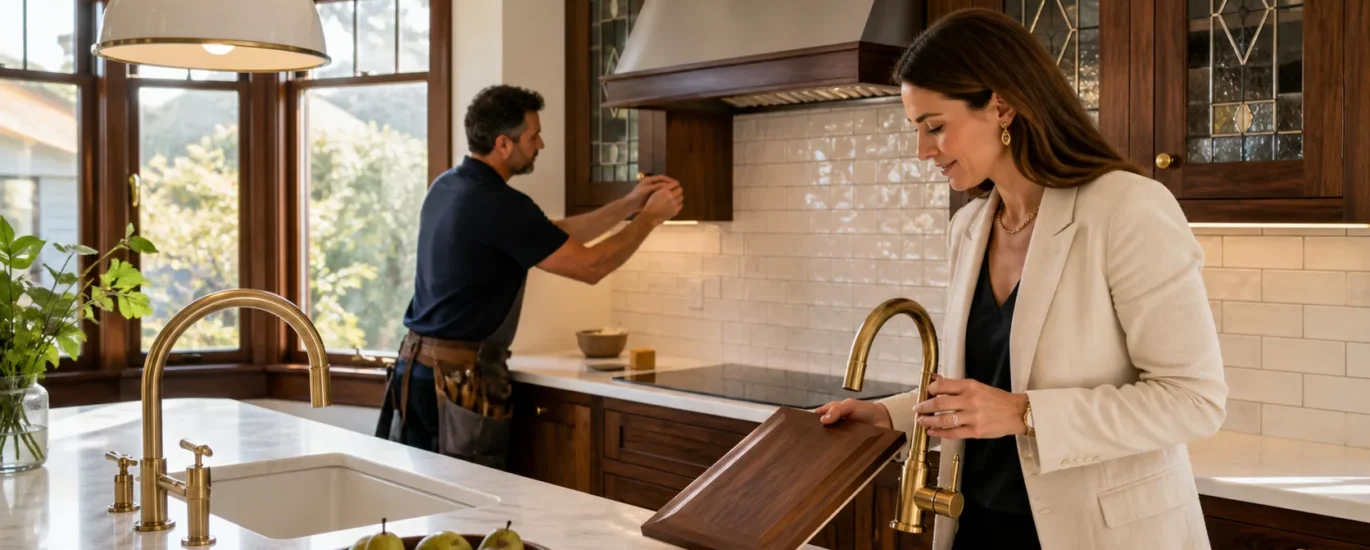
Cabinet hardware seems small, but it is often the bridge between old architecture and new cabinets. Scale, shape, and finish can either calm everything down or make it feel disjointed.
Some finishes that tend to work well in Burlingame kitchens include:
When mixing metals, a little planning goes a long way. We usually suggest:
For example, you might have brass pulls and knobs, a brass island pendant, then a stainless faucet and stainless appliances. Or you could pair polished nickel faucets with darker knobs and pulls, repeating that darker metal in a sconce or island light. The idea is to create a rhythm of finishes, not a collection of random pieces.
Older Burlingame homes are often charming, but not always bright. A layered lighting plan helps you respect the ceilings and plaster while still getting good task light.
Think in three layers:
Fixture style can nod to your home’s history without feeling theme-y. Schoolhouse-style pendants work well in Craftsman and early bungalows. Lantern-inspired fixtures suit Tudor and Mediterranean homes. In more streamlined houses, simpler shades in classic finishes like brass or polished nickel keep things feeling timeless.
Color temperature matters here too. Warmer LEDs in the 2700K to 3000K range tend to flatter wood grain and plaster walls. Dimmers let you switch from bright cooking mode to softer evening gatherings with one touch. In rooms where adding lots of recessed lights is tricky, we often lean on:
The kitchen is usually the heart of the main level, so its palette often guides nearby spaces. A simple way to build a whole-home look is to pick:
Carry pieces of the kitchen into nearby rooms. If you have white oak in the kitchen, repeat that tone in a breakfast nook bench or dining room furniture. If you choose a warm white on the cabinets, consider a related shade on the walls in the hall or family room.
Use stronger color or pattern where it can shine without overwhelming the space:
By keeping the big surfaces like floors, main cabinets, and counters fairly classic, you give your home a timeless backdrop. Thoughtful Burlingame kitchen remodeling that respects materials and finishes tends to feel better day to day and can support long-term resale because the house feels put together, not patched over.
If you are ready to transform your space, our team at True Builders is here to guide you through every step. Explore your options for Burlingame kitchen remodeling and see how thoughtful design and quality craftsmanship can elevate your home. Share your ideas, and we will help you refine the details, timeline, and budget so you feel confident moving forward. To discuss your project and schedule a consultation, simply contact us.
Author: Tomas H., True Builders Luxury Kitchen Remodeling Specialist